

Vitamin D is not merely an ordinary vitamin; it also functions like a “hormone” in the body. When converted into its active form (calcitriol), vitamin D binds to the Vitamin D Receptor (VDR), which is present in nearly every cell in the body. This binding helps regulate the expression of numerous genes, influencing the function of multiple bodily systems.
Vitamin D therefore plays a wide-ranging role, including:
Supporting calcium absorption and strengthening bones
Enhancing muscle function
Helping to regulate and balance the immune system
Modulating inflammation
Supporting energy metabolism
Promoting energy production in the mitochondria
Regulating hormonal balance and being essential for the production of sex hormones such as oestrogen, progesterone, and testosterone (thereby influencing libido)
Maintaining neurotransmitter balance (serotonin, dopamine, GABA, glutamate)
Supporting liver function in detoxification
For these reasons, vitamin D acts as a regulatory, hormone-like substance with crucial roles at the cellular level throughout the body, far beyond that of a simple nutritional supplement.
What Is Vitamin D Deficiency?
Vitamin D deficiency refers to a condition in which blood levels of vitamin D fall below normal, to the extent that bone health, muscle function, immunity, and metabolism begin to be affected.
It is assessed by measuring blood levels of 25-hydroxyvitamin D [25(OH)D].
12 Warning Signs of Vitamin D Deficiency
Increased sensitivity to pain
Low vitamin D levels may alter nervous system pain perception, so even light touch can feel unusually painful.Depression and anxiety
Vitamin D helps regulate inflammation in the brain and balance neurotransmitters such as serotonin and dopamine. Deficiency has been linked to depression and anxiety disorders, including Seasonal Affective Disorder (SAD), which commonly occurs in late rainy or winter seasons when sunlight exposure decreases and improves when sunlight increases.Daytime sleepiness and fatigue
Vitamin D is essential for mitochondrial energy production. Deficiency may lead to persistent tiredness, even in the absence of illness.Frequent illness and weakened immunity
Insufficient vitamin D can impair immune cell function, leading to more frequent colds, fevers, migraines, and an increased risk of autoimmune conditions.Muscle weakness
Vitamin D supports muscle strength and recovery. Low levels may result in reduced strength and diminished exercise capacity.Frequent fractures or injuries
Vitamin D works alongside magnesium and vitamin K2 to direct calcium into bones. Deficiency can lead to brittle bones and a higher risk of fractures.Reduced libido
Vitamin D is important for the production of male and female sex hormones. Deficiency may disrupt hormonal balance and affect sexual drive.High blood pressure
Low vitamin D may contribute to vascular inflammation and constriction, potentially raising blood pressure.Learning and memory difficulties
Vitamin D supports optimal brain cell function. Deficiency may reduce concentration, memory capacity, and learning ability.Seasonal allergies
Imbalance in histamine regulation and immune cell function may increase allergic susceptibility and symptom severity.Migraines
Vitamin D deficiency has been associated with mast cell and histamine dysregulation, potentially contributing to recurrent migraines.Loss of muscle and bone mass
Vitamin D is essential for maintaining muscle, bone, and cartilage. Deficiency may result in reduced muscle mass and overall strength.
Optimal Vitamin D Levels
20 ng/mL = Deficiency
20–29 ng/mL = Insufficiency
30–50 ng/mL = Adequate for the general population
40–60 ng/mL = Often considered an optimal range in preventive or functional medicine practice
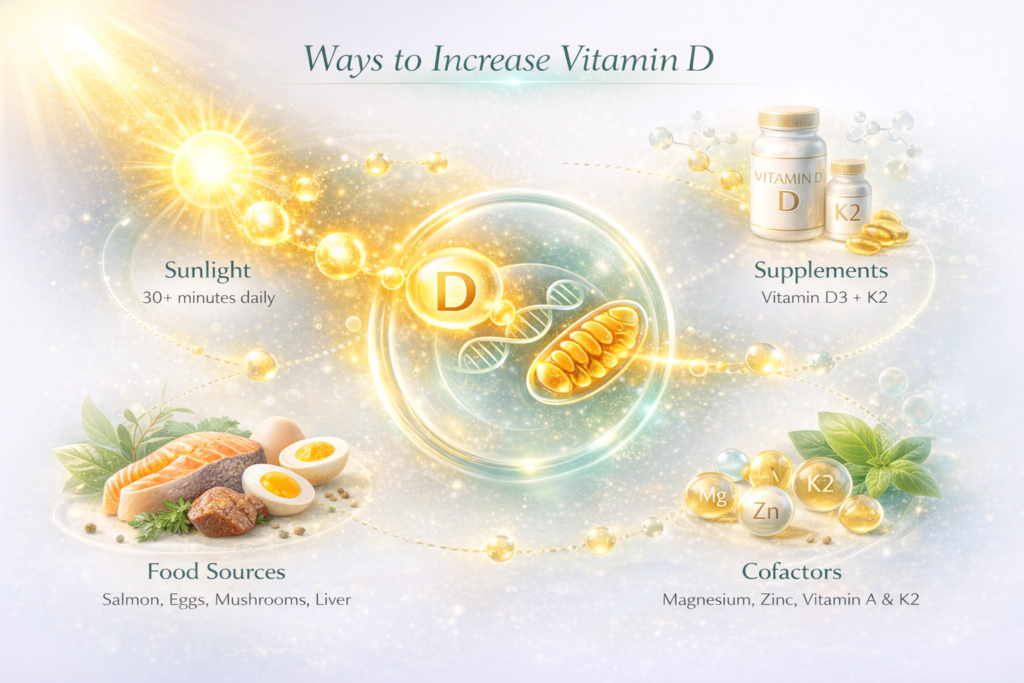
How to Increase Vitamin D Levels
Sunlight Exposure
30–45 minutes of daily sun exposure (avoiding sunburn)
Dietary Sources
Eggs from free-range hens
Butter from grass-fed cows
Salmon
Beef and liver
Mushrooms
Supplementation
- Maintenance dose: ~1,000 IU per 11.3 kg of body weight
- If deficient: ~2,000 IU per 11.3 kg of body weight
- During acute illness: Higher short-term doses may be used (e.g. 50,000 IU per day for 3–5 days)
- Take with meals, as vitamin D is fat-soluble.
- Important co-factors: magnesium, zinc, vitamins A and K2 help optimise absorption and utilisation.
IU (International Unit) is a standardised unit of measurement used for certain substances (distinct from milligrams or micrograms).
Summary
Vitamin D deficiency does not only lead to brittle bones; it also affects mood, immunity, hormones, energy levels, and even pain perception. Maintaining vitamin D within an optimal range supports strength, vitality, and immune resilience.
Laboratory Test
Vitamin D (25(OH)D: Total Vitamin D)
References
1.Holick, M. F. (2007). Vitamin D deficiency. The New England Journal of Medicine, 357(3), 266–281.
2.Holick, M. F., Binkley, N. C., Bischoff-Ferrari, H. A., Gordon, C. M., Hanley, D. A., Heaney, R. P., … Endocrine Society. (2011). Evaluation, treatment, and prevention of vitamin D deficiency: An Endocrine Society clinical practice guideline. The Journal of Clinical Endocrinology & Metabolism, 96(7), 1911–1930.
3.Pilz, S., Zittermann, A., Trummer, C., Theiler-Schwetz, V., Lerchbaum, E., Keppel, M. H.,März, W. (2019). Vitamin D testing and treatment: A narrative review of current evidence. Endocrine Connections, 8(2), R27–R43.
4.Bouillon, R. (2017). Comparative analysis of nutritional guidelines for vitamin D. Nature Reviews Endocrinology, 13(8), 466–479.
5.Bischoff-Ferrari, H. A., Shao, A., Dawson-Hughes, B., Hathcock, J., Giovannucci, E., & Willett, W. C. (2010). Benefit–risk assessment of vitamin D supplementation. Osteoporosis International, 21(7), 1121–1132.
6.Grant, W. B., Lahore, H., McDonnell, S. L., Baggerly, C. A., French, C. B., Aliano, J. L., & Bhattoa, H. P. (2020). Evidence that vitamin D supplementation could reduce risk of influenza and COVID-19 infections and deaths. Nutrients, 12(4), 988.